




Vitamin C Benefits for Skin (How It Works & How to Use)
Now, find out how Vitamin C benefits skin with its antioxidant properties, sun protection, and ability to reduce fine lines.
 By WOWMD Staff

 Fact Checked
Advertiser Disclosure: WOWMD independently vets all recommended products. If you purchase a featured product, we may be compensated. Learn why you can trust us.

Anyone who pays attention to any skincare news or products has heard about the wonders of vitamin C for face application and supplementation. Vitamin C is hailed as one of the most protective nutrients for your skin.
Vitamin C is a proven antioxidant that helps brighten dark spots, support collagen, and protect against UV-induced damage.
But is all the hype really warranted? What does vitamin C do in skincare if anything? The short answer to these questions is that vitamin C does appear to protect the skin against ultraviolet light damage and that vitamin C may help produce collagen in the skin.
However, that is only part of the story. You still have to be selective about how you use vitamin C, how you get vitamin C-rich foods in your diet, and which products you buy.
In the following article, we are discussing vitamin C benefits for skin. Read on to find out everything you need to know about this supposed wonder nutrient.
TL;DR
- Brightens & fades spots: inhibits excess melanin
- Supports collagen: smoother look, fewer fine lines
- Antioxidant defense: helps limit UV/pollution damage (with SPF)
- Use 10–20% L-ascorbic acid (or stable derivatives for sensitive skin)
- AM use + SPF, results in 4–8+ weeks
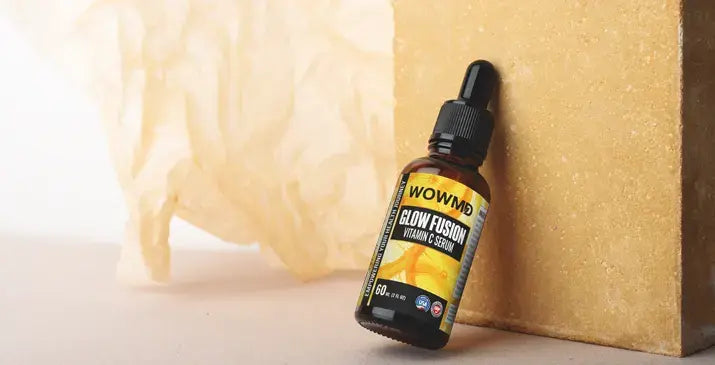
- Try: WOWMD Glow Fusion Vitamin C Serum (Shop Now)
What Is Vitamin C?
Vitamin C is also known as ascorbic acid. It is a naturally occurring nutrient that plays many roles in the human body. For instance, many believe that vitamin C is essential for proper immune function[1]. But vitamin C has benefits beyond immunity support.
One of the most important general roles of vitamin C is as an antioxidant. An antioxidant helps defend the organs against free radical cell damage which can cause many issues and health complications.
Free radicals can even damage the skin and cause premature signs of skin aging. Vitamin C is found naturally in some foods such as oranges, strawberries, peppers, broccoli, brussels sprouts, potatoes, blackcurrants, and more[2].
Vitamin C is generally regarded as safe for consumption and supplementation but taking too much may cause some minor side effects which we will discuss in more detail in a later section.
Advertisement

 *All individuals are unique. Your results can and will vary.
The Science Behind Vitamin C for Skin
So what does vitamin C do for your skin and what does the science have to say about it? In general, there have been studies that suggest that vitamin C can protect the skin from sun damage[3].
This may be especially true when vitamin C is combined with a good sunscreen. Vitamin C skin benefits may also extend to collagen production. One National Institutes of Health report stated that[4]:
“Preclinical studies demonstrated that vitamin C has the potential to accelerate bone healing after a fracture, increase type I collagen synthesis, and reduce oxidative stress parameters.”
Dr. Avron Lipschitz, an award-winning Board-Certified Plastic Surgeon with over 15 years of experience, shares:
Dr. Avron Lipschitz
In my practice at Athena Plastic Surgery, I've seen how Vitamin C can improve skin health, particularly via its role in collagen production. During facial rejuvenation procedures, patients who incorporate Vitamin C into their skincare routine often report a noticeable improvement in skin elasticity and resilience. This is largely due to Vitamin C's ability to promote collagen synthesis, fortifying the skin’s structure.
I’ve also found that Vitamin C is effective for addressing hyperpigmentation and uneven skin tone, which are common concerns among my patients. By inhibiting melanin production, it promotes a more even skin appearance. This is especially beneficial for individuals who have undergone laser treatments, as Vitamin C helps reduce post-inflammatory pigmentation.

Vitamin C skincare benefits may also have something to do with reduced skin inflammation. Multiple studies suggest that Vitamin C has a soothing effect on the skin by reducing inflammation that can cause irritation of various kinds[5].
As such, it may be able to reduce your risk of developing conditions like acne, eczema, and dermatitis.
The Benefits of Vitamin C for Skin
 Benefit of Vitamin C for Daily Skincare
In the following section, we will talk about the specific ways in which vitamin C can have a positive impact on skin health and appearance:
Brightens Skin Tone
A significant benefit of vitamin C is that it may reduce the generation of melanin on the skin which can cause dark spots. It also fights the signs of hyperpigmentation caused by sun damage.
Using a skin moisturizer or sunscreen that contains vitamin C is a great way to brighten your skin and avoid dark spots. Use sunscreen daily or any time you know you will be in the sun.
Reducing Wrinkles and Fine Lines
Vitamin C may have a hydrating effect on skin. Hydration is the key to preventing signs of skin aging like wrinkles and fine lines. Vitamin C also plays a role in collagen synthesis - effectively increasing collagen production.
Also Read: How Does Vitamin C Help Collagen Production
Protecting Against Sun Damage
UV rays can wreak havoc on the skin. Vitamin C has been observed to have photoprotective effects in many clinical studies. This means that it may reduce the extent of UV damage on the skin.
Vitamin C should be used in tandem with sunscreen that has an SPF factor of 50 or higher for proper skin protection. To further protect your skin from sun damage, you can try wearing large-brimmed hats, and sunglasses, and limiting your sun exposure.
Boost Skin Health with Glow Fusion Vitamin C Serum – Order Now!
Fading Hyperpigmentation
Vitamin C may play a role in regulating tyrosinase - an enzyme that is linked with melanin production in the skin. The National Institutes of Health has also acknowledged that Vitamin C may be useful for depigmentation purposes[6].
This means that vitamin C may help to reduce the visibility of dark spots on your skin. For the best depigmentation results with vitamin C, use it with sunscreen and apply it in the morning. You may also want to look for products that contain vitamin E to boost the protective action. Also, be consistent with your application.
Improves Skin Texture
Because vitamin C has a hydrating effect on the skin in most cases, it can serve to make your skin smoother to the touch. Using a vitamin C skin moisturizer regularly may work to fortify the outer moisture barrier of your skin which can improve its overall texture.
Types of Vitamin C
Several types of vitamin C variants appear on skincare labels. L-ascorbic acid represents the sole "active" form—easily absorbed and extensively researched. Other alternatives are "non-active," requiring conversion to L-ascorbic acid within the skin, potentially reducing effectiveness.
L-Ascorbic Acid Or Ascorbic Acid (Laa)
L-ascorbic acid (LAA) is water-soluble and widely popular. Though most studied and effective, it's among the least stable forms. Seek stabilizers like vitamin E or ferulic acid in formulations. Patch test before use, as LAA may irritate sensitive skin.
Tetrahexyldecyl Ascorbate
Tetrahexyldecyl ascorbate is oil-soluble, derived from stearic acid. Used for free radical protection and natural luminosity enhancement, it offers superior stability compared to ascorbic acid.
Magnesium Ascorbyl Phosphate
Magnesium Ascorbyl Phosphate provides stable, water-soluble vitamin C benefits, making it ideal for sensitive skin or those experiencing L-ascorbic acid irritation.
Advertisement

 *All individuals are unique. Your results can and will vary.
Sodium Ascorbyl Phosphate
Sodium Ascorbyl Phosphate is water-soluble, effective for brightening and reducing inflammation. Its exceptional stability prevents degradation from air or light exposure.
Comparison Table
| Ingredients | Benefits | Best For | Found In | Clinically Studied |
|---|---|---|---|---|
| L-ascorbic acid (LAA) | Water-soluble, most studied, effective but unstable. Can irritate sensitive skin. | Brightening, free radical protection | Skincare formulations with stabilizers | ✅ |
| Tetrahexyldecyl Ascorbate | Oil-soluble, superior stability, enhances luminosity, offers free radical protection. | Sensitive skin, stability | Skincare oils, creams | ✅ |
| Magnesium Ascorbyl Phosphate | Stable, water-soluble, ideal for sensitive skin and irritation from LAA. | Sensitive skin, stable formulation | Skincare formulations | ✅ |
| Sodium Ascorbyl Phosphate | Water-soluble, effective for brightening, inflammation reduction, stable under exposure. | Brightening, anti-inflammatory | Serums, moisturizers | ✅ |
What To Look For In A Vitamin C Serum?
Choose a vitamin C suited to your skin type—sensitive skin should use stabilized forms like magnesium or sodium ascorbyl phosphate. Select products with 10-20% concentration and pH below 3.5 for maximum effectiveness. Seek formulas with complementary antioxidants like retinol and ferulic acid to enhance vitamin C's benefits.
Ensure products come in dark, airtight packaging since vitamin C degrades when exposed to light, air, and moisture. Discard serums showing oxidation signs: brown/orange color, clumpy texture, or bad odor.
Choose vitamin C in moisturizers or serums rather than cleansers, essences, or toners, which don't remain on skin long enough to be effective.
| Skin type | Start at | Build to |
|---|---|---|
| Sensitive/dry | 5–10% (MAP/SAP/THD) | 10–15% |
| Normal/combination | 10–15% LAA | 15–20% |
| Oily/blemish-prone | 10–15% (SAP/LAA) | 15–20% |
Mari S.
"I’ve been using the WOW Vitamin C Serum, and it’s a game-changer for my skincare routine! It’s lightweight, absorbs quickly, and leaves my skin feeling hydrated and radiant. After just a few weeks, I’ve noticed my dark spots fading, and my overall skin tone looks brighter and more even. Perfect for that natural glow! Highly recommend this if you’re looking to level up your skincare game."
How to Use Vitamin C in Your Skincare Routine?
To use vitamin C for face benefits, it’s best to start slow. Start by choosing a vitamin C product that contains L-ascorbic acid which is one of the many types of vitamin C that is highly bioactive and most likely to have noticeable effects.
You should also look for a vitamin C cream, oil, serum, or sunscreen that has a concentration of 10% vitamin C or more as anything less may not have the intended effects.
It’s also a good practice to use a vitamin C product with a good sunscreen so that you can protect your skin against most forms of UV damage. And if you’re wondering whether there is a best time of day to apply vitamin C to your face, there is.
Generally, the best time to apply vitamin C is in the morning before you step out into the sun. You may also want to reapply after you have been in the sun for more than a few hours.
Boost results with WOWMD Glow Fusion Vitamin C Serum → (Shop Now)
Did You Know?
- Vitamin C + E + SPF outperforms SPF alone for defending against environmental stressors.
- Oxidized Vitamin C (orange/brown) is less effective—time to replace.
- Most users see brighter tone in 4–8 weeks with daily AM use + SPF.
See how WOWMD Glow Fusion Vitamin C Serum has helped our client achieve smoother, more even-toned skin. Watch her review and find out how this serum can work wonders for you!
Potential Side Effects and Precautions
Although ascorbic acid is considered generally safe for consumption, taking too much may cause side effects. Generally, it is recommended that adults avoid ingesting more than 2,000 milligrams of vitamin C per day. Exceeding this upper limit may cause side effects such as headaches, dizziness, nausea, and vomiting (Ref).
Skin irritation is also a small possibility when using topical vitamin C products. That’s why it’s a good idea to do a spot test first. Place a small amount of the product on one area of your skin to see if it causes any adverse reactions or irritation before full
Checklist For Vitamin C Skin Benefits
- Choose products with at least 10% Vitamin C.
- Use stabilized Vitamin C for sensitive skin.
- Apply in the morning with sunscreen.
- Ensure airtight packaging to avoid oxidation.
- Test for irritation with a patch test.
Final Thoughts
So is vitamin C good for your skin? If you choose the right product, use it carefully, are consistent with your skincare routine, and understand the limitations of this nutrient, you are likely to reap noticeable skin benefits from it.
That’s because vitamin C has shown great potential for protecting the skin against UV damage, producing more collagen, and even correcting sunspots that may already be present on your skin.
As always, it’s a good idea to speak to a dermatologist about the potential of Vitamin C products before buying. If you are discerning, consistent, and maintain a healthy lifestyle, you may have great results with a vitamin C product.
Learn More about Vitamins C:
- Is It OK To Take Vitamin C and Zinc Together
- Are Vitamin C and Calcium The Same Thing
- Can You Take Vitamin C and D Together?
- Is resveratrol better than vitamin C for skin
Advertisement

 *All individuals are unique. Your results can and will vary.
FAQs
Our Top Picks


Resveratrol
You May Also Like

Popular Stories
- Best Ayurvedic Supplements of 2026: A Complete Guide to Ingredients, Quality, and Daily Use
- Best Grass-Fed Collagen Peptides: Reviewing the Top Powders
- 4 Best Face Oils for Gua Sha: Top Picks for Smooth, Glowing and Hydrated Skin
- 10 Best Electrolyte Powders for Ultimate Hydration & Recovery
- 6 Best Fast-Acting Melts Oral Strips for Energy in 2026
- 6 Best Oral Strips: Top Picks for Sleep, Relaxation & Nighttime Comfort
References
WOWMD follows strict sourcing guidelines to ensure the accuracy of its content, outlined in our editorial policy. We use only trustworthy sources, including peer-reviewed studies, qualified experts, and information from top institutions.


- Vitamin C: https://www.mayoclinic.org/drugs-supplements-vitamin-c/art-20363932
- Vitamin C: https://www.nhs.uk/conditions/vitamins-and-minerals/vitamin-c/
- Why is topical vitamin C important for skin health?: https://www.health.harvard.edu/blog/why-is-topical-vitamin-c-important-for-skin-health-202111102635
- Efficacy of Vitamin C Supplementation on Collagen Synthesis and Oxidative Stress After Musculoskeletal Injuries: A Systematic Review: https://pmc.ncbi.nlm.nih.gov/articles/PMC6204628/
- Vitamin C in dermatology: https://pmc.ncbi.nlm.nih.gov/articles/PMC3673383/
- The effect of Vitamin C on melanin pigmentation – A systematic review: https://pmc.ncbi.nlm.nih.gov/articles/PMC7802860/
- Vitamin C (Ascorbic Acid): https://www.ncbi.nlm.nih.gov/books/NBK499877/