




Creatine Benefits
Discover how creatine boosts muscle performance, supports cognitive function, and enhances overall wellness with safe, effective supplementation.
 By WOWMD Staff

 Fact Checked
Advertiser Disclosure: WOWMD independently vets all recommended products. If you purchase a featured product, we may be compensated. Learn why you can trust us.
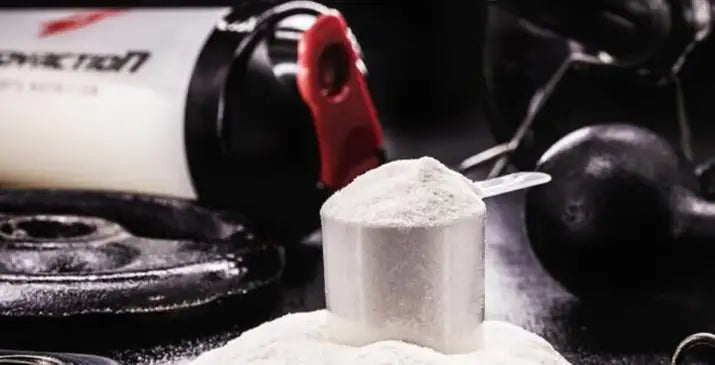
Muscle performance ultimately comes down to one thing: how well your body generates energy at the cellular level. And few compounds play a more central role in that process than creatine.
Creatine is a compound that supports rapid energy production, helping skeletal muscles contract during intense physical effort. Your body produces it primarily in the liver, kidneys, and pancreas, and you get small amounts from dietary protein sources like red meat and fish. For people who train consistently or push themselves physically, that baseline supply is rarely enough to optimize performance.
How Creatine Powers Your Muscles
The currency your cells spend during exercise is adenosine triphosphate, or ATP. During short, explosive bursts of activity like a heavy squat, a sprint, or a jump, your body burns through ATP faster than it can be regenerated through conventional metabolic pathways.
That's where the phosphocreatine system, also called the PCr system, steps in. Phosphocreatine acts as a rapid reserve, donating a phosphate group to adenosine diphosphate to regenerate ATP almost instantly. The more phosphocreatine stored in your muscle tissue, the longer and harder you can push before fatigue sets in.
When you supplement with creatine, you increase the phosphocreatine available in your muscles. According to Harvard Health, creatine contributes to rapid energy production and may enhance power or speed during short periods of anaerobic activity. This is precisely why it has become one of the most well-studied performance supplements across strength training, sprinting, cycling, and team sports.
Creatine also supports glycogen storage in muscle tissue, providing an additional energy source for sustained training. That dual role, fueling explosive power and supporting glycogen reserves, makes it genuinely versatile across a range of athletic goals.
The Benefits That Go Beyond the Gym
Most people start taking creatine for the performance side, but research points to a wider story. Your brain is a high-energy organ that also relies on ATP, and preliminary research suggests creatine may support cognitive function, particularly as you age.
Research indicates that a higher dietary intake of creatine may help brain function in people 60 and older, including areas like short-term memory and reasoning. Supporting your cellular energy system may offer benefits that reach well past muscle contractions, which shifts creatine from a gym supplement into a broader wellness conversation.
What This Means Before You Shop
Understanding how creatine works at the cellular level gives you a smarter lens for evaluating products. The form of creatine matters. So does the dosage, the purity, and how the product is manufactured. The section that follows breaks down the most common forms available today and how they compare across absorption, bioavailability, cost, and real-world results.
Advertisement

 *All individuals are unique. Your results can and will vary.
Comparing Types of Creatine: Which Is Right for You?
Walk through any supplement aisle and you'll find monohydrate, hydrochloride, buffered, ethyl ester, and more, each with its own claims, price point, and use case. The core function stays consistent across forms, but they differ meaningfully in solubility, dosage, absorption profile, and tolerability.
Creatine Monohydrate
This is the starting point for most people, and the science backs that up. Creatine monohydrate is the most extensively researched form available, with decades of studies consistently supporting its role in short-burst power output, muscle volume, and glycogen storage. It's also the most affordable option per gram of active creatine, the practical choice for anyone building a consistent supplement routine.
The one common complaint is mild bloating or digestive discomfort during a traditional loading phase. Taking it with food and staying well-hydrated tends to reduce this considerably. If you're new to creatine and want a straightforward, research-backed entry point, monohydrate is where the evidence is strongest.
Creatine Hydrochloride (HCl)
Creatine hydrochloride is a form of creatine combined with a hydrochloride salt, which increases its water solubility. It dissolves more readily in the stomach, and many users report fewer digestive issues compared to monohydrate at equivalent doses. Because it's more concentrated, effective doses are typically smaller.
The trade-off is cost. Creatine HCl is generally more expensive per serving, and while its tolerability profile is a genuine benefit for sensitive stomachs, the long-term research base is thinner than monohydrate's. It's a solid choice if digestive comfort has been a barrier for you in the past.
Buffered Creatine (Kre-Alkalyn)
Buffered creatine is formulated at a higher pH to reduce conversion of creatine to creatinine in the stomach, which manufacturers argue improves bioavailability, meaning the degree to which a nutrient is absorbed and used by the body. In practice, the evidence is mixed. Head-to-head comparisons with monohydrate haven't shown a consistent performance advantage. It's worth considering if you've tried monohydrate and want to experiment, but it's not a necessary upgrade for most people.
Creatine Ethyl Ester
This form attaches an ester group to creatine to theoretically improve cell membrane absorption. However, research suggests it may actually convert to creatinine faster than monohydrate, potentially reducing effectiveness rather than enhancing it. For most users focused on muscle energy and recovery, ethyl ester is not the first recommendation from exercise scientists.
Which Form Should You Choose?
For the majority of active adults, creatine monohydrate remains the most evidence-supported and cost-effective option. If digestive sensitivity is a real concern, creatine HCl is a well-tolerated alternative worth trying. Buffered forms may suit lower-dose protocols, but the performance advantage over monohydrate isn't firmly established.
Advertisement

 *All individuals are unique. Your results can and will vary.
Potential Side Effects and Risks of Creatine Supplementation

Creatine has one of the strongest safety records of any widely used sports supplement. The International Society of Sports Nutrition has concluded that creatine monohydrate is the most effective ergogenic nutritional supplement currently available to athletes for increasing high-intensity exercise capacity and lean body mass during training. That said, understanding where the real concerns lie, and separating them from common myths, helps you make an informed decision.
Common Side Effects
While creatine's safety profile is well-established, it's not entirely without side effects.
Water Retention
The most frequently reported side effect is water retention, particularly during a loading phase. Creatine draws water into muscle cells, which supports strength and volume. For most people, this shows up as a modest weight increase of one to three pounds that stabilizes after the first week or two of consistent use.
Gastrointestinal Discomfort
Gastrointestinal discomfort is another commonly reported side effect, most often tied to taking large doses at once. Splitting your intake across smaller servings with meals tends to reduce this significantly.
Some people notice muscle cramping, though the research on whether creatine directly causes this is mixed. Creatine increases the water demand in your muscles, so staying well-hydrated is essential.
What the Research Does Not Support
A few persistent myths deserve a direct response. Creatine does not damage healthy kidneys. This concern originated from a misunderstanding of creatine metabolism: it raises creatinine levels in the blood, which can look like a red flag on a basic lab panel, but in people with normal kidney function, this reflects normal metabolic activity rather than kidney stress. Long-term studies in healthy adults have not found meaningful evidence of renal harm at recommended doses.
Hair loss is another concern that circulates widely. One small 2009 study by van der Merwe et al. found elevated DHT levels in rugby players using creatine, and DHT is a hormone linked to androgenetic alopecia. However, that study did not measure hair loss directly, and no follow-up research has replicated a clear connection. The claim remains speculative, not established.
Who Should Be More Cautious
The picture changes for certain groups. People with pre-existing kidney disease or reduced kidney function should approach creatine carefully and only with medical guidance. This is covered in more depth in the next section.
Adolescents are another group where caution is warranted. Research in youth populations is limited, and the long-term effects during development are not well characterized. Most sports medicine bodies recommend that young athletes prioritize nutrition and training fundamentals before adding any ergogenic supplement.
Anyone taking medications that affect kidney function, blood pressure, or fluid balance should check with their healthcare provider before starting creatine, not because creatine is inherently harmful, but because individual circumstances vary.
Practical Safety Takeaways
For most healthy adults, the risk profile at recommended doses is low. Stay consistently hydrated, especially on training days. Start with a maintenance dose rather than jumping into a loading protocol. And if you notice persistent digestive issues, unusual swelling, or unexpected changes during exercise, scale back and check in with your doctor.
Creatine works gradually and consistently. There's no need to push doses higher than the research supports.
Creatine Use for Special Populations
Creatine is well-tolerated for most healthy adults, but if you're managing chronic kidney disease (CKD) or Ehlers-Danlos syndrome (EDS), the standard guidance doesn't fully apply. These populations have distinct physiological considerations that shape how creatine should be approached.
Creatine and Chronic Kidney Disease
The kidneys naturally filter creatinine, a by-product that forms when creatine breaks down. When kidney function is already compromised, there's a legitimate question about whether supplemental creatine puts additional strain on the system.
The research here is genuinely limited. Most large-scale creatine safety studies have excluded people with pre-existing kidney disease, so the evidence base for this group is thinner than many would expect. What clinicians do know is that creatine supplementation raises serum creatinine levels, which can complicate kidney function testing and make results harder to interpret accurately.
For anyone with CKD, this is not a reason to dismiss creatine outright. It is a reason to loop in your nephrologist or primary care provider before starting. A physician familiar with your baseline kidney function can give you a far more individualized read on whether supplementation makes sense at any dose. Some people with mild or well-managed kidney impairment may have more flexibility than those with moderate to severe disease.
Creatine and Ehlers-Danlos Syndrome
EDS is a group of connective tissue disorders that affect collagen structure throughout the body. Joint hypermobility, fragile tissue, and chronic pain are common features. Because strength training and physical therapy are often central to EDS management, creatine's core benefits become directly relevant.
Building and maintaining muscle mass can help support joint stability in people with hypermobility. Creatine supports the energy systems that power resistance training, making it a reasonable complement to a structured movement program for some individuals with EDS. That said, exercise tolerance and fatigue patterns vary significantly across EDS subtypes and individual cases.
Gastrointestinal sensitivity is well-documented in EDS. As noted earlier in this guide, higher creatine doses can occasionally cause digestive discomfort, so starting with a lower dose and monitoring tolerance closely is a sensible approach for anyone in this group.
As with CKD, working alongside your rheumatologist, physical therapist, or specialist is the most important step. EDS management is deeply individualized, and supplementation decisions should reflect your specific symptom profile and treatment plan.
The Overarching Principle
For both populations, the message is the same. Creatine is not off-limits by default, but it is not a decision to make without medical guidance. The science that applies to healthy recreational athletes does not automatically transfer to people managing complex chronic conditions. Your starting point is a conversation with your care team.
Advertisement

 *All individuals are unique. Your results can and will vary.
Creatine's Broader Health Benefits, Beyond Muscle Performance
Muscle support gets most of the headlines. But the research points to a wider story: one that connects creatine to how your brain functions and how your cells manage energy under pressure.
Creatine's Role in Cellular Metabolism
The reason creatine touches so many areas of the body comes down to cellular energy. As Kreider and Stout note in their published research, creatine plays a critical role in cellular metabolism, particularly during metabolically stressed states, and while it has been mostly studied as an ergogenic aid, several broader health benefits have also been reported.
That framing matters. Creatine benefits the body not just during a hard training session but during recovery, illness, periods of poor sleep, or the normal metabolic demands of aging. For health-conscious adults managing energy, cognitive clarity, or the natural effects of aging, this reframes creatine as a foundational wellness tool rather than a niche sports supplement.
What This Means for Your Wellness Routine
Results develop with consistent use over time. Creatine isn't a fast-acting stimulant; it works gradually by saturating your muscle and brain tissue with a ready energy reserve. Most people notice differences in stamina and mental clarity after several weeks of regular supplementation, whether you are a younger adult managing a demanding schedule or an older adult focused on staying sharp and active.
Quality and formulation matter just as much as consistency. Not all forms are absorbed equally, and sourcing matters for purity. The next section walks through exactly how to evaluate your options.
The Bottom Line on Creatine
Creatine is one of the most researched, most validated compounds in the supplement space and for good reason. It extends beyond the gym into cognitive health and healthy aging. And when used correctly, it carries one of the strongest safety profiles of any ergogenic aid available. Whether you're training for performance, supporting your brain health, or simply building a more resilient foundation as you age, creatine has earned its place in a thoughtful supplement routine.
WOWMD's NexGen Creatine is built around a high-purity creatine formula designed for maximum bioavailability, manufactured in a GMP-certified, FDA-registered facility in the USA. It is non-GMO, free of artificial additives, and expert-formulated by a team that includes PhDs and registered dietitians, taking the guesswork out of quality and purity.
You May Also Like





Popular Stories
- Best Ayurvedic Supplements of 2026: A Complete Guide to Ingredients, Quality, and Daily Use
- Best Grass-Fed Collagen Peptides: Reviewing the Top Powders
- 4 Best Face Oils for Gua Sha: Top Picks for Smooth, Glowing and Hydrated Skin
- 10 Best Electrolyte Powders for Ultimate Hydration & Recovery
- 6 Best Fast-Acting Melts Oral Strips for Energy in 2026
- 6 Best Oral Strips: Top Picks for Sleep, Relaxation & Nighttime Comfort